
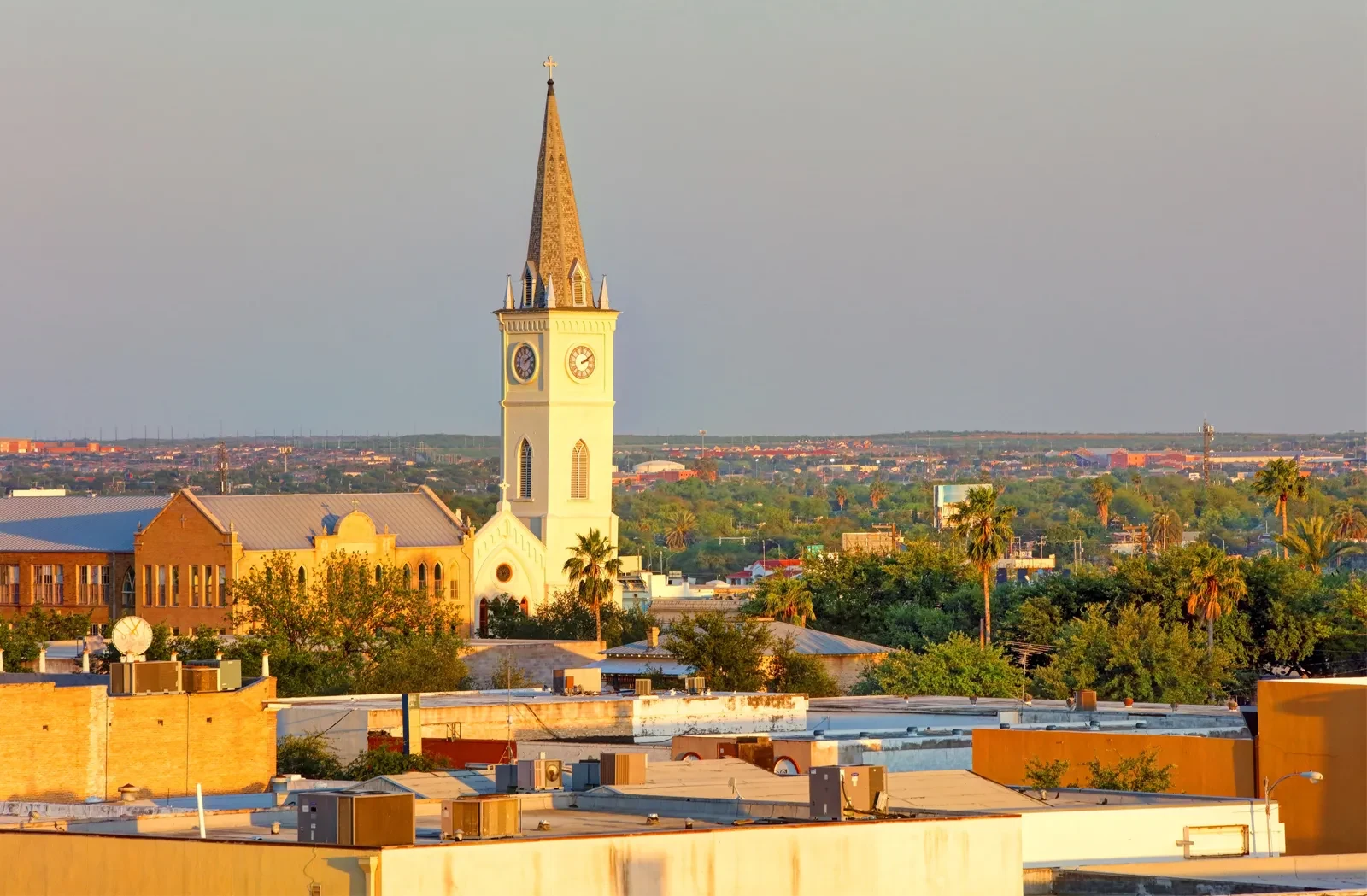
Commercial Roofers in San Diego, TX
A practical commercial roofing plan for San Diego, TX properties separates urgent leak control from repair, coating, maintenance, and replacement decisions supported by photos and condition findings. San Diego is the Duval County seat, and its commercial roof stock reflects that: a historic courthouse and county annex buildings downtown, a school district campus, small ranching-supply and retail buildings along Highway 44, and oilfield offices that come and go with the drilling cycle. None of that adds up to a large roof market, and we scope it that way rather than pretending San Diego has a distribution district it does not have.
The Courthouse and County Buildings Set the Standard
Duval County's public buildings are the oldest significant roofs in town, and public work here runs on procurement rules, budget cycles, and public accountability that a private landlord doesn't deal with. We write scope and pricing for county and school work in plain, itemized language so it can move through a board meeting or a bid packet without translation, and we keep photo documentation clean enough to stand on its own in a public record. A courthouse roof also tends to have decades of layered repairs underneath the current surface, so we look hard at what is actually happening at the deck before recommending a coating, recover, or full tear-off.
Small Retail and Ranch-Supply Buildings on Highway 44
The commercial strip along Highway 44 through San Diego is short and mostly low-slope or shallow-metal buildings built for feed and ranch supply, small offices, and local retail rather than big-box format. These buildings are usually owner-occupied, which means the roof decision is personal and budget-driven in a way a REIT-owned property never is. We give straight numbers on repair-versus-replace for these owners rather than pushing a bigger scope than the building needs.
Oilfield Offices Track the Drilling Cycle
Duval County has been an oil and gas county for generations, and San Diego still hosts field offices, yards, and support buildings that expand when a company is active in the area and sit half-used when activity slows. Roofs on these buildings often started as quick, functional installs meant to get an office open fast, and years later that shows up as inconsistent flashing details and mismatched patch materials. We document what is actually on the roof before quoting repair work, because a fast original install is not always built the way the paperwork says it was.
Heat, Not Hurricanes, Drives the Maintenance Calendar
San Diego is inland enough that hurricane wind is a lesser concern than it is on the coast, but South Texas summer heat is relentless, and UV degradation on an aging membrane or coating is the more common failure mode here. A white or reflective roof coating does real work in this climate by cutting rooftop surface temperature, but coatings only perform if the substrate underneath is sound, so we test adhesion and moisture before recommending one. Freeze events are rare but not unheard of, and a hard freeze on a roof with trapped moisture can crack a brittle membrane overnight, so we do not ignore that risk just because it is uncommon. We compare silicone roof coatings against acrylic options based on ponding conditions and existing membrane type before recommending either one.
Where We Focus a San Diego Inspection
- Deck and insulation condition under layered repairs on older county buildings
- Coating adhesion and reflectivity on heat-aged membrane roofs
- Flashing consistency at additions built onto oilfield office buildings
- Metal roof fastener condition on ranch-supply and retail buildings
- Drainage on flat sections behind parapet walls downtown
Working With Public and Private Owners the Same Way
Whether the building belongs to Duval County, the school district, or a private owner on Highway 44, we use the same walk-through process: mark every penetration, drain, and repair before recommending a scope. For public buildings we keep records organized for board review. For private owners we keep the conversation direct and focused on what actually needs to happen this year versus what can wait. A town the size of San Diego does not generate a large volume of commercial roof work in any given month, so when a call does come in, whether it is a leak at the annex or a metal panel loose after a wind event, we treat it as a full inspection opportunity rather than a quick single-issue patch. That approach catches secondary problems, a cracked pipe boot near the leak that reported, a drain partly blocked by mesquite debris, before they turn into their own service call six months later.
What San Diego Building Owners Ask Us
Do you bid on public roof projects for Duval County or the school district?
Yes. We provide itemized scope and pricing documentation formatted for public bid and board review, and we keep site photos and condition notes organized to support that process.
Is a roof coating a realistic option for an older courthouse-area building?
Sometimes. It depends on whether the existing deck and insulation are dry and sound. We test moisture and adhesion before recommending a coating instead of a recover or tear-off.
Do oilfield office buildings need different roof work than retail buildings?
The construction is often similar, but oilfield offices tend to have more add-on additions and mismatched flashing from fast original builds, so we spend more time checking transition details on those roofs.
How much does South Texas heat actually affect a flat commercial roof?
A lot. Sustained UV exposure and high surface temperatures accelerate membrane aging and coating breakdown, which is why reflective coatings and regular inspection matter more here than in a milder climate.
Can a small owner-occupied building get the same inspection you'd do for a bigger property?
Yes. The walk-through process is the same regardless of building size. The scope of the recommendation just scales to what the roof actually needs.