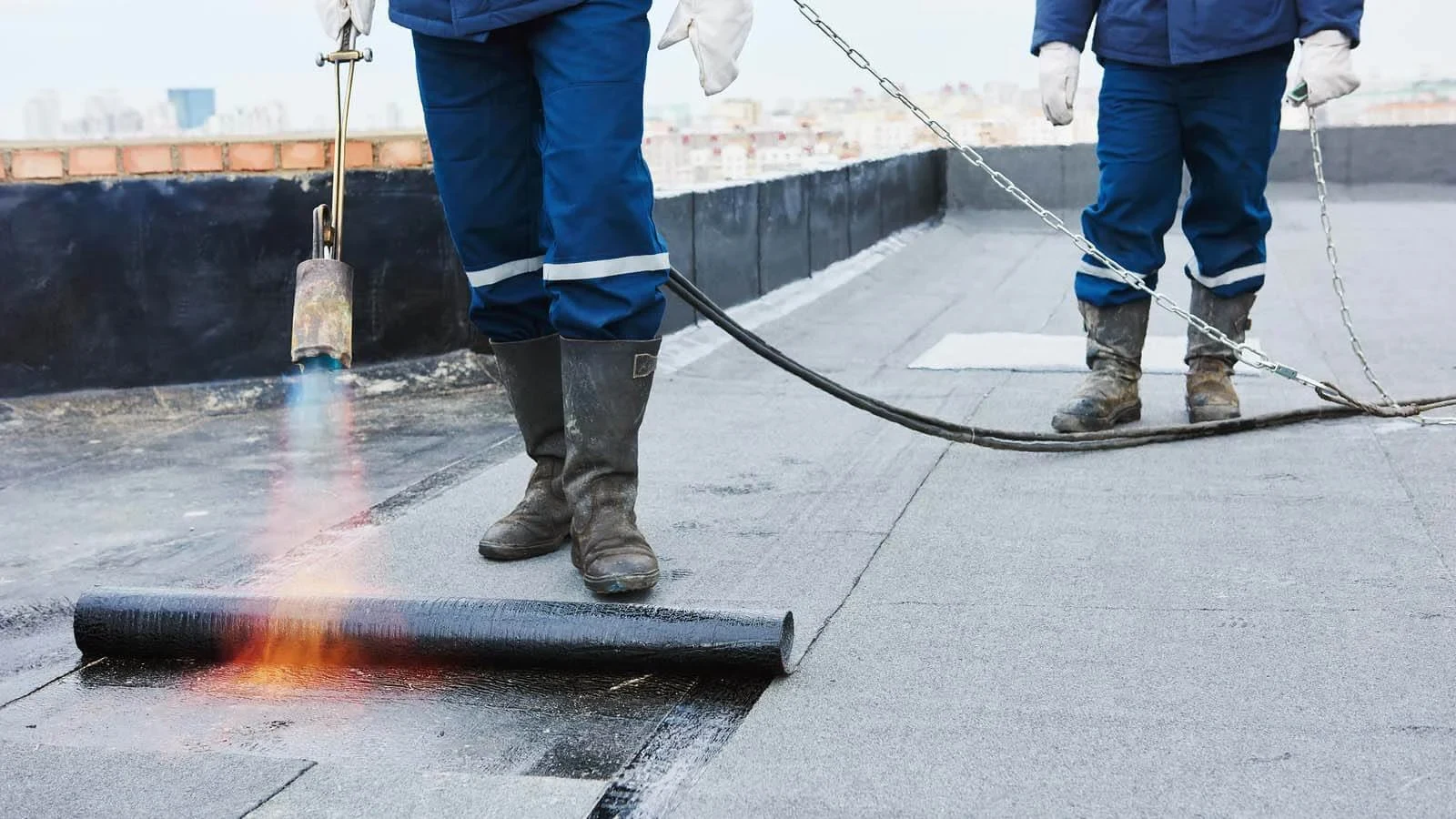
Gravel-Surfaced Built-Up Roofs on Laredo's Government and Legacy Buildings
Built-up roofing, the layered asphalt-and-felt system with a gravel or mineral surface, is still on some of Laredo's older government, school, and commercial buildings, and it is a system we evaluate roof by roof rather than assume needs replacing just because it is old.
Why BUR Lasted on Certain Buildings
Built-up roofs were the standard commercial system for decades before single-ply membranes took over, and a well-installed multi-ply BUR system with gravel surfacing can still be performing after many years if it has been maintained. The redundancy of multiple asphalt-and-felt plies gives BUR a level of built-in protection against a single point of failure that thinner systems do not have.
The gravel or mineral surfacing does double duty, reflecting some solar heat and protecting the asphalt plies underneath from direct UV exposure. In Laredo's climate, that surfacing matters more than it would in a milder region, since bare asphalt exposed to this much sun degrades quickly.
We see the most BUR roofs on courthouse, school, and other public buildings near downtown, along with a handful of older office buildings that predate the shift toward single-ply membranes. Many of these were built before energy codes required the insulation levels expected today, so a BUR evaluation on a public building often turns into a conversation about adding insulation value at the same time as addressing the roof surface, rather than a simple like-for-like patch.
What Extreme Heat Does to an Aging BUR Roof
Asphalt softens under sustained heat, and Laredo's summer roof surface temperatures can get high enough to make an aging BUR system more vulnerable to foot traffic damage, blistering, and slow ply separation than the same roof would be in a cooler climate. We are more cautious about rooftop access on hot BUR roofs during peak summer afternoons for exactly this reason.
Where the gravel surfacing has thinned or washed away in spots, exposed asphalt degrades fastest, and those bare patches are usually where we find blistering or granule-level UV damage first during an inspection.
Weight, Deck Condition, and Replacement Decisions
BUR systems, especially with gravel surfacing, are heavier than single-ply alternatives, which matters when a building's deck is being evaluated for a recover or replacement. An aging deck that has taken on water damage over the years may not support adding another layer, which pushes the conversation toward full tear-off rather than recover, regardless of how much life is left in the surface plies.
We check deck condition directly wherever access allows, rather than assuming a deck built to support one BUR system decades ago still has that same capacity today after years of moisture exposure and prior repairs.
Repair Approach on Multi-Ply Systems
A localized BUR problem, a blister, a soft spot, a failed patch, is usually addressed by cutting out the damaged section and tying new plies into the sound surrounding roof, rather than treating the whole field as compromised. That targeted approach keeps a functioning BUR roof in service longer without unnecessary cost.
Flashing at parapets, curbs, and drains fails before the field plies typically do on a BUR roof, and that is where most of our repair work actually happens. A field membrane that still has years of life left is often paired with flashing that is already due for attention.
- Older government and municipal buildings near downtown Laredo
- School buildings with multi-ply BUR roofs installed decades ago
- Roofs with thinned or displaced gravel surfacing exposing bare asphalt
- Buildings where deck load capacity limits recover options
- Roofs with isolated blistering or ply separation rather than widespread failure
When Recover or Replacement Makes More Sense Than Repair
Widespread blistering, extensive bare asphalt from lost surfacing, or moisture found under multiple sections during a probe are the signs that push a BUR roof from repair into recover or replacement territory. At that point, patching individual spots stops being cost-effective compared to addressing the roof as a whole.
We document these conditions with photos and probe results tied to specific roof zones, which gives ownership a clear basis for budgeting a larger project instead of continuing to chase leaks one at a time.
On public buildings, that documentation often has to support a formal bid or budget approval process rather than a single owner's decision, so we write the condition report in plain terms that a facilities committee or a school board can act on without needing a roofing background to follow it.
Built-Up Roofing Questions We Get
Is an old built-up roof automatically due for replacement?
Not necessarily. A well-maintained multi-ply BUR system with sound gravel surfacing can still be performing well, and we check condition directly rather than assuming based on age alone.
Why does gravel surfacing matter so much in Laredo?
It protects the asphalt plies underneath from direct UV exposure, which matters more here given how much sustained sun the roof takes through the summer months.
Can a new membrane be installed over an old BUR roof?
Sometimes, if the deck can support the added weight and the existing plies are dry and stable. We check deck condition before recommending a recover.
What usually fails first on a BUR roof?
Flashing at parapets, curbs, and drains typically fails before the field plies do, which is where most of our repair work is concentrated.
How do you check for hidden moisture in a BUR system?
We probe suspect areas directly and look for soft spots, blistering, and ply separation, tying each finding to a specific roof zone for the record.