School Roof Projects Run on the Summer Calendar, Not Ours
United ISD and Laredo ISD manage dozens of campuses built across different decades, and most of the roof work on those campuses has to happen in the narrow window between the last school bell in May and the first one in August. We plan district roofing around that calendar first.
The Summer Window Is Non-Negotiable
A district roof project that isn't finished before students return is a real problem for a working school building with active classrooms below, not a scheduling inconvenience. We build our project schedule backward from the first day of school, not forward from a convenient start date.
For campuses where a full reroof can't reasonably finish in one summer, we scope the work in phases across multiple summers, prioritizing the sections in worst condition first so the building's most vulnerable areas get addressed even if the whole roof isn't done at once.
We keep district facilities staff updated on progress throughout the summer so there's no surprise if weather or unforeseen deck conditions push part of the schedule.
Late-summer thunderstorms can also threaten a project's finish date, so we build weather contingency into the schedule from the start rather than assuming every June and July day is a clear working day on a campus roof project.
Gym and Cafetorium Roofs Carry Different Loads Than Classroom Wings
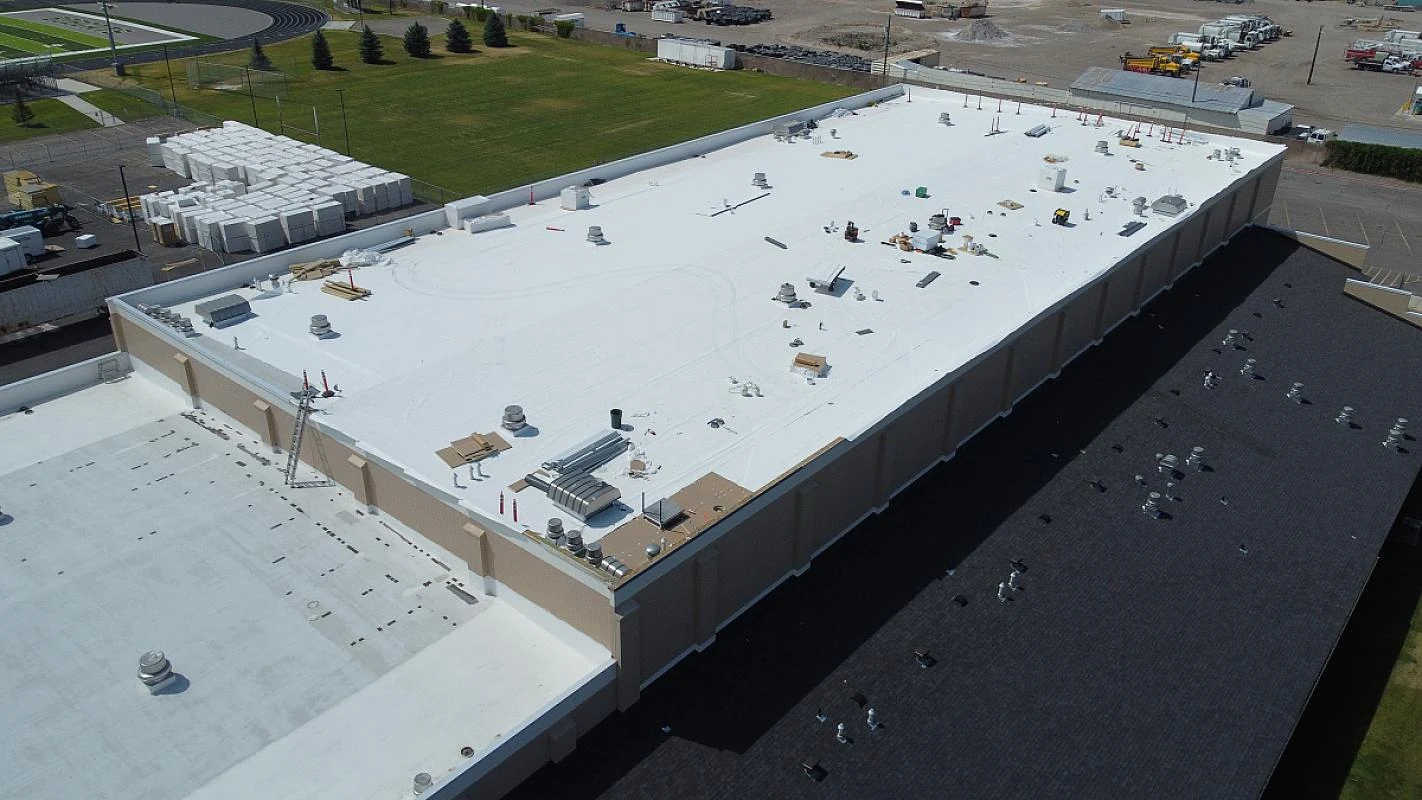
School campuses typically mix low-slope classroom wing roofs with larger clear-span gym or cafetorium roofs, and those larger spans see more deflection and different drainage patterns than the classroom sections, which changes where ponding and membrane stress actually show up.
We survey gym and cafetorium roofs separately from classroom wings during a district-wide assessment, because treating a whole campus as one uniform roof condition misses where the real problems are concentrated.
Many of the older gym roofs we see across district campuses were built-up or modified bitumen systems added in phases over the years, and we evaluate whether a recover or full replacement makes more sense given the deck's condition underneath.
Rooftop HVAC units serving a gym or cafetorium are also larger and heavier than the units serving a classroom wing, and the curbs supporting them need the same close inspection we give any large-equipment penetration on a commercial roof.
Older campuses sometimes have a gym roof structure that was never designed for the added weight of HVAC equipment installed decades after original construction, and we flag that structural question separately from the roofing scope when we see it, since it's a conversation for the district's engineer, not something we'll guess at.
Bond Funding Shapes the Project Timeline
District roofing projects often move through a bond program with its own approval calendar, which means the roof condition assessment sometimes happens a year or more before the actual construction window. We write our reports to hold up over that lag, with enough detail that a district can plan a bond ask around them.
When a campus needs interim repairs while waiting on bond-funded replacement, we handle that work separately so an active leak doesn't sit unaddressed for a budget cycle.
We prioritize our recommendations by urgency and remaining service life so a facilities director can make the case for which campuses come first in a limited bond allocation.
- District-wide roof condition assessments for bond planning
- Summer-window scheduled reroofing and phased multi-summer projects
- Gym and cafetorium roof evaluation separate from classroom wings
- Interim leak repair while bond-funded work is pending
- Built-up and modified bitumen roof recover for older campus buildings
- Storm damage assessment across multi-campus districts
Working on a Campus Without Disrupting Summer Programs
Summer isn't always empty at a school campus. Band programs, summer school, athletics camps, and the district's own maintenance crews often use the building even while classes are out. We coordinate our schedule with whatever else is using the campus that summer.
We fence and mark active work areas clearly, particularly around gym roofs where summer athletics activity might be happening directly below.
For campuses running any kind of summer session, we confirm the building's actual occupancy schedule with district facilities before finalizing our own project timeline.
We also coordinate directly with the campus's own maintenance staff, since they're often the ones fielding questions from parents or coaches about why part of the building looks closed off, and giving them the same project overview we give the district office keeps everyone's answer consistent.
Questions From District Facilities Staff
Can a full campus reroof realistically finish in one summer?
It depends on the building's size and roof condition. For larger campuses we often phase the work across two or more summers, prioritizing the worst sections first.
How do you handle campuses still running summer programs?
We coordinate our schedule with whatever summer activity is happening on campus and clearly mark active work zones, especially around gyms.
Do you provide assessments that can support a bond funding request?
Yes, our condition reports are detailed enough to support a district's bond planning process and hold up over the time between assessment and funded construction.
What happens if a campus has an active leak while waiting on bond-funded work?
We handle interim repair separately so the leak doesn't sit unaddressed while the district works through its funding timeline.
Do gym roofs need different treatment than classroom wing roofs?
Usually, yes. Gym and cafetorium roofs are larger clear spans with different drainage and deflection patterns, and we evaluate them separately during assessment.