PVC Roofing for Buildings Near Diesel, Grease, and Truck Traffic
PVC membrane's real advantage over TPO and EPDM isn't reflectivity - all three can be specified white - it's chemical resistance. That matters specifically on buildings near heavy truck idling, loading docks with grease exhaust, or any tenant operation that puts petroleum-based contaminants in the air near the roof. Laredo has plenty of those buildings.
Chemical Resistance Where Other Membranes Fall Short
TPO and EPDM membranes can degrade when exposed to petroleum-based oils, greases, and certain solvents over time. PVC's chemistry resists that kind of exposure far better, which is exactly why it's the standard choice for roofs near restaurant exhaust systems, industrial process vents, or any building where truck idling and diesel exhaust drift settles onto the roof surface day after day. Around Mines Road and the truck-yard-heavy corridors feeding the international bridges, that exposure is constant, not occasional.
Hot-Air Welding in Extreme Ambient Heat
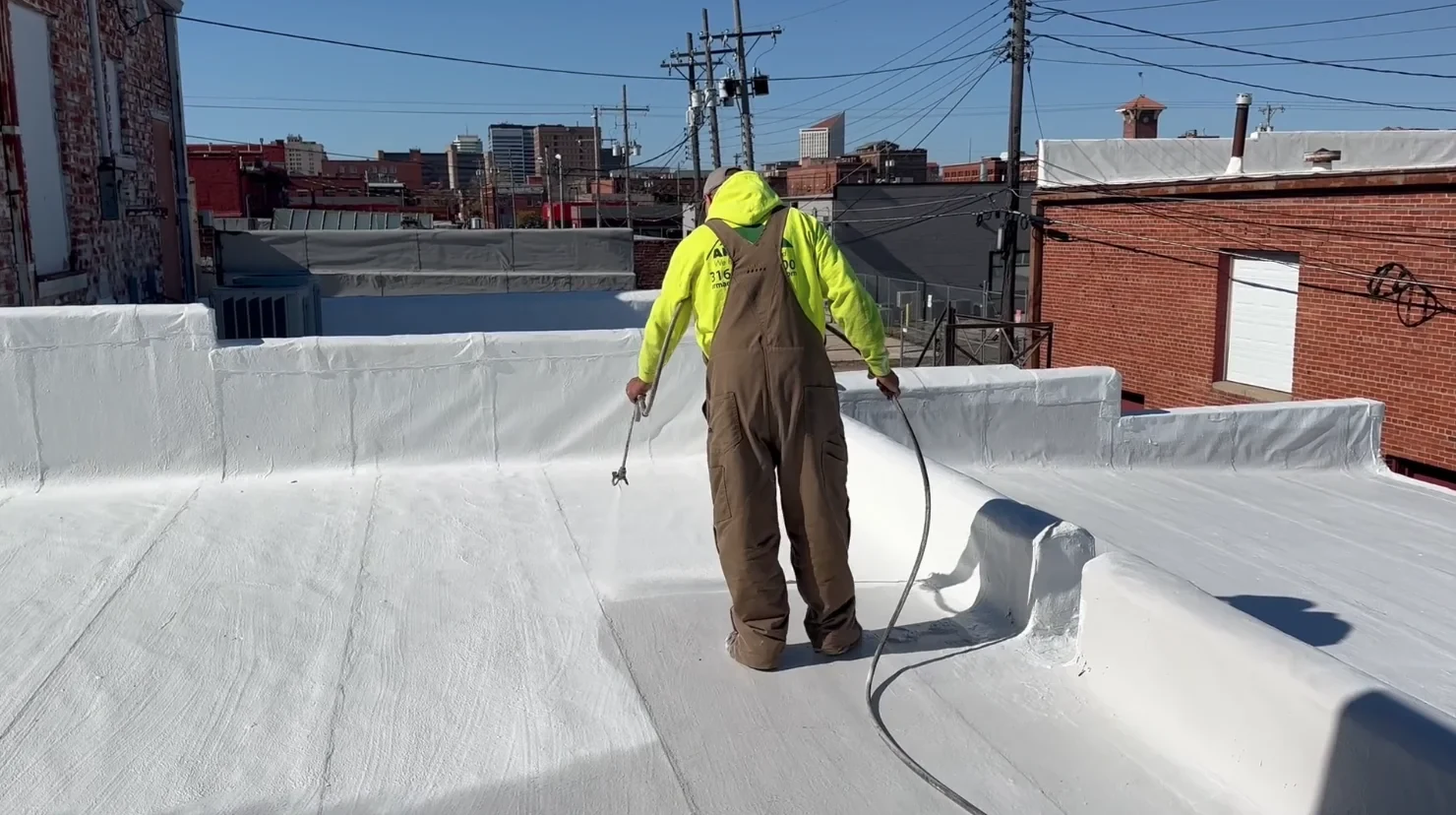
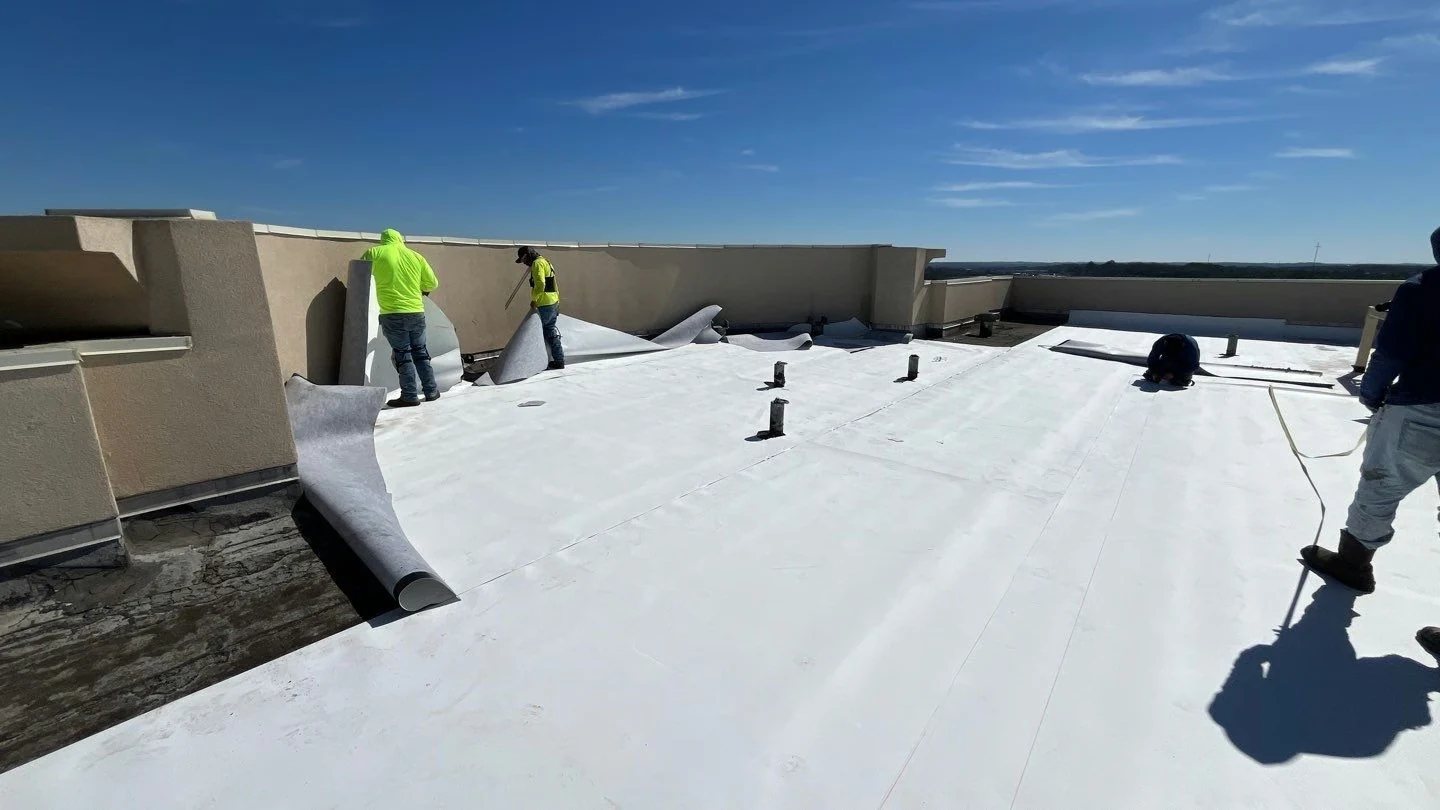
PVC seams are hot-air welded similarly to TPO, and the same field-heat discipline applies - deck and membrane surface temperatures in a Laredo summer climb fast once the sun is up, and weld consistency depends on managing that. We run PVC installs on the same early-schedule discipline as TPO jobs and probe every seam before signing off on the work.
Diesel, Grease, and Loading-Dock Exposure in Practice
We've pulled TPO membrane off buildings adjacent to heavy truck yards that showed real surface degradation from years of diesel exhaust exposure that a PVC membrane in the same location would have shrugged off. It's not a hypothetical concern for a border logistics city - it's a specific, observable failure mode we've seen firsthand on the wrong membrane in the wrong location.
Fully Adhered Versus Mechanically Fastened PVC
PVC on a Laredo commercial roof can be installed fully adhered or mechanically fastened, and the decision depends more on deck type and wind zone than on the membrane itself. Fully adhered systems distribute wind load differently across the field and can reduce the number of visible fastener rows, which matters on a building with rooftop-visible architecture from an adjacent structure or overpass. Mechanically fastened PVC is generally more economical on a straightforward warehouse deck, and it's what we default to unless the specific building calls for something else.
- Roof location assessed for proximity to exhaust, grease vents, or truck idling areas
- Membrane chemistry matched to the specific contaminant exposure, not assumed
- Weld schedule planned around morning deck temperatures
- Every seam probed and the results logged by roof zone
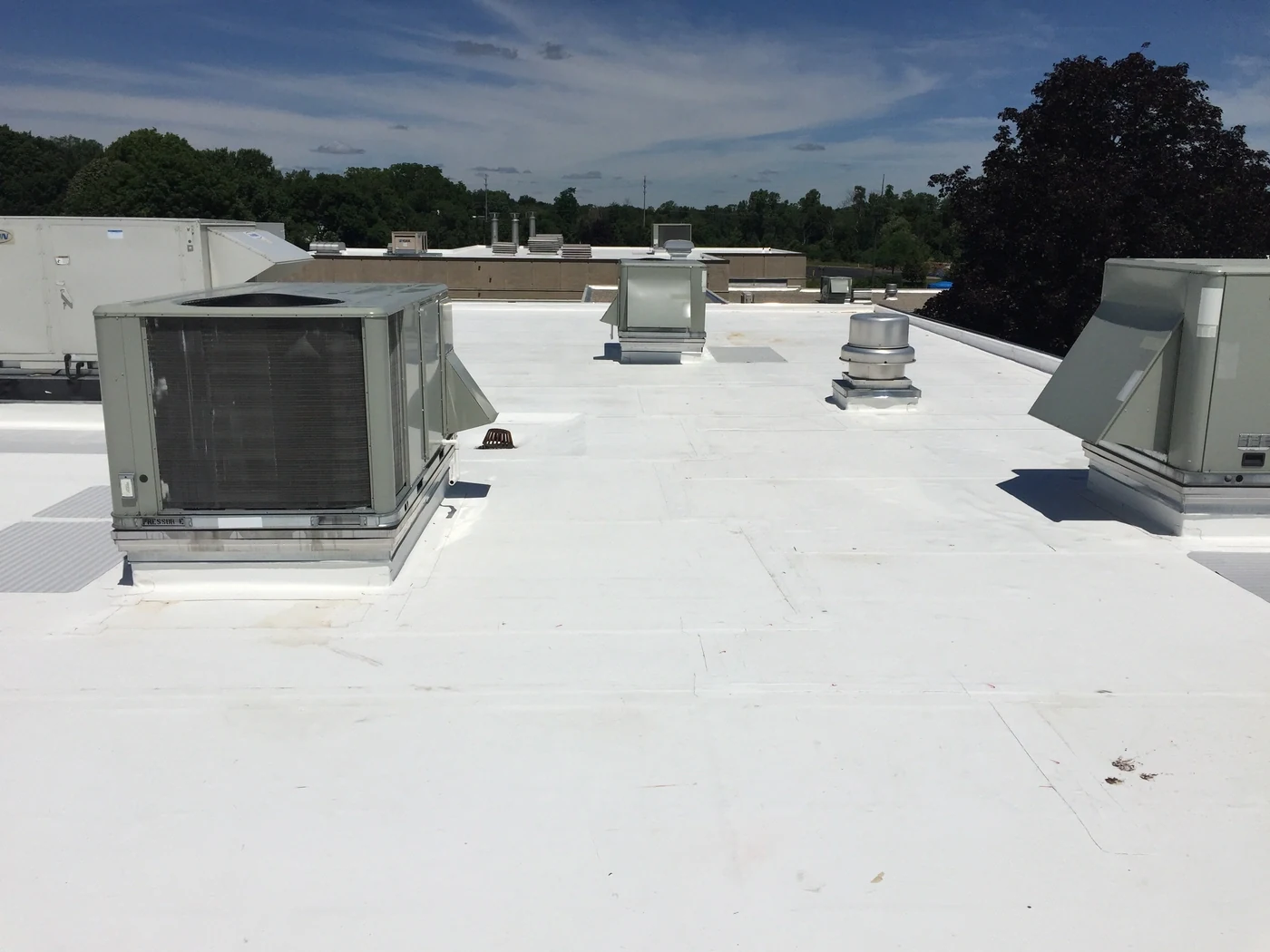
- Flashing detail reviewed at kitchen and mechanical exhaust penetrations specifically
PVC's Plasticizer Question Over Decades
Older-generation PVC membranes had a real issue with plasticizer migration that made the sheet brittle over time, which is part of why some contractors are cautious about PVC's long-term track record. Modern PVC formulations from established manufacturers have addressed that issue substantially, but we still tell owners honestly that PVC's very-long-term aging behavior is a fair question to ask a manufacturer directly, and we don't oversell a multi-decade performance claim we can't back up with our own direct field history on this specific product generation.
Where We Spec PVC Around Laredo
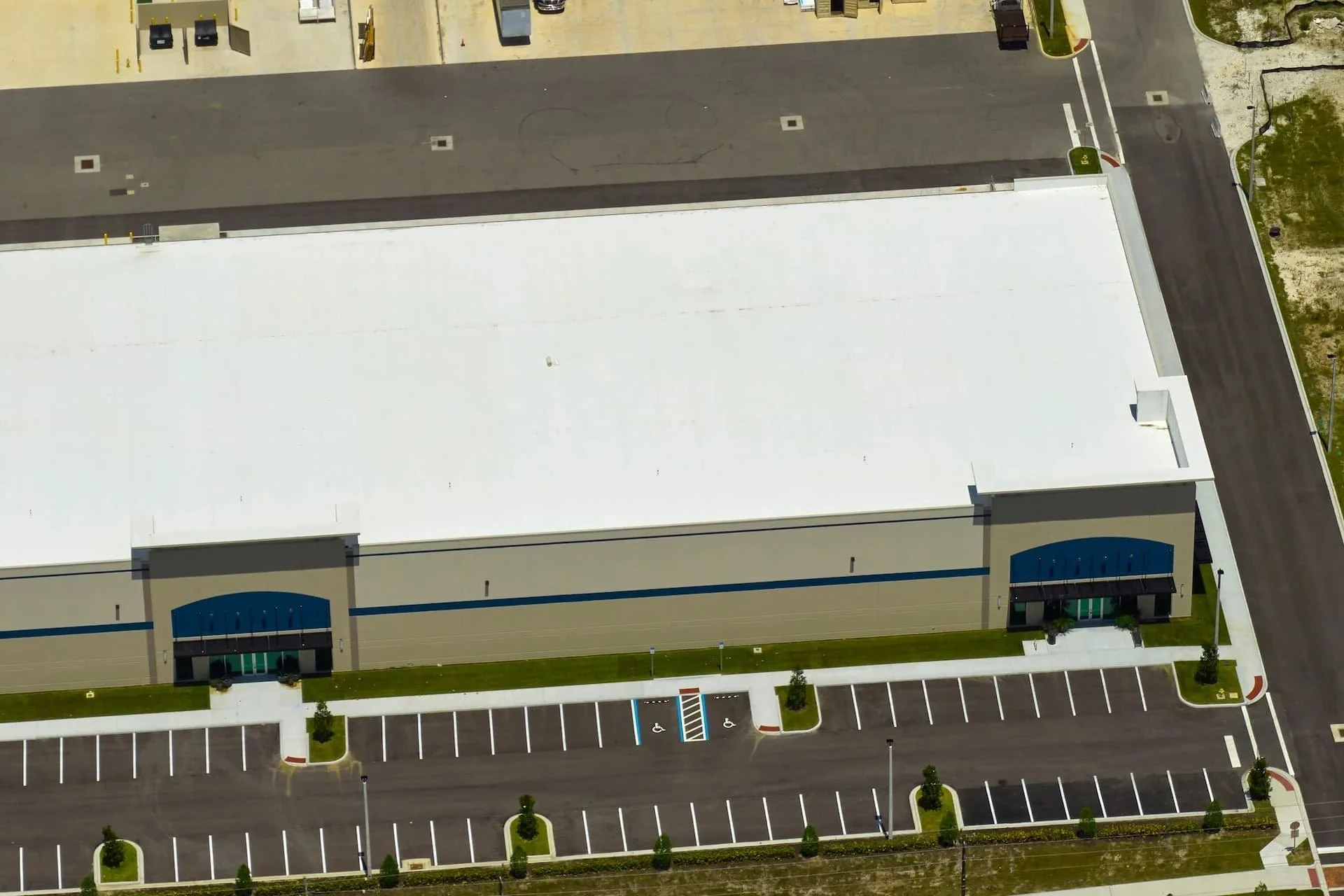
Restaurant and food-service buildings with roof-level exhaust, any warehouse or distribution building with heavy truck-yard exposure, and industrial buildings with process venting are where PVC earns its higher material cost over TPO. On a standard retail strip or office building with no unusual chemical exposure, we typically don't recommend paying the PVC premium, since TPO performs just as well in that environment for less money. See our 80-mil TPO page for that comparison.
PVC membrane comes in white as standard for most commercial applications, giving it the same reflectivity advantage discussed on our TPO pages, and it carries fire ratings comparable to other single-ply membranes when installed to the manufacturer's assembly specification. We size the fastening and cover board assembly to the specific fire and wind rating a building's insurance carrier or local code requires rather than assuming a generic assembly meets every requirement, since PVC's fire classification depends on the full roof assembly, not the membrane alone.
Insurance carriers writing policies on industrial buildings near Laredo's rail and truck corridors sometimes ask specifically about roof assembly fire classification as part of underwriting, and having that documentation ready before the question comes up saves an owner a scramble later. We keep the assembly's rated components and test data on file alongside the rest of the project record.
Questions About PVC Roofing in Laredo
Is PVC always better than TPO?
No. PVC's advantage is specifically chemical resistance. On a building without grease, diesel, or solvent exposure, TPO usually performs comparably for a lower material cost.
How much more does PVC cost than TPO?
PVC typically carries a real cost premium over TPO per square foot; we walk owners through that cost difference against the specific exposure risk on their building before recommending it.
Does PVC hold up to Laredo's UV exposure as well as TPO?
Yes, PVC membranes are designed for long-term UV exposure similarly to TPO; the deciding factor between the two is almost always chemical exposure risk, not UV performance.
What about the older plasticizer brittleness problem - is that still an issue?
Modern PVC formulations have substantially addressed the plasticizer migration issues seen in older-generation product, though we still discuss long-term aging honestly with owners rather than making an unqualified multi-decade claim.
Can PVC be welded to an existing TPO roof during an addition?
No, PVC and TPO are chemically incompatible for direct welding; a building addition using a different membrane type needs a properly designed transition detail, not a direct weld between the two.