Perimeter Details That Decide Whether a Roof Survives a Storm
Edge metal, parapet coping, and gutters don't get much attention until one of them fails, but they're usually the first thing to go when wind hits a flat roof. Most of the wind-related calls we take in the Killam and Unitec area start at a perimeter detail, not out in the middle of the field membrane. Getting these details right is cheaper than repairing the water damage that follows when they don't hold.
Why the Edge Goes Before the Field Does
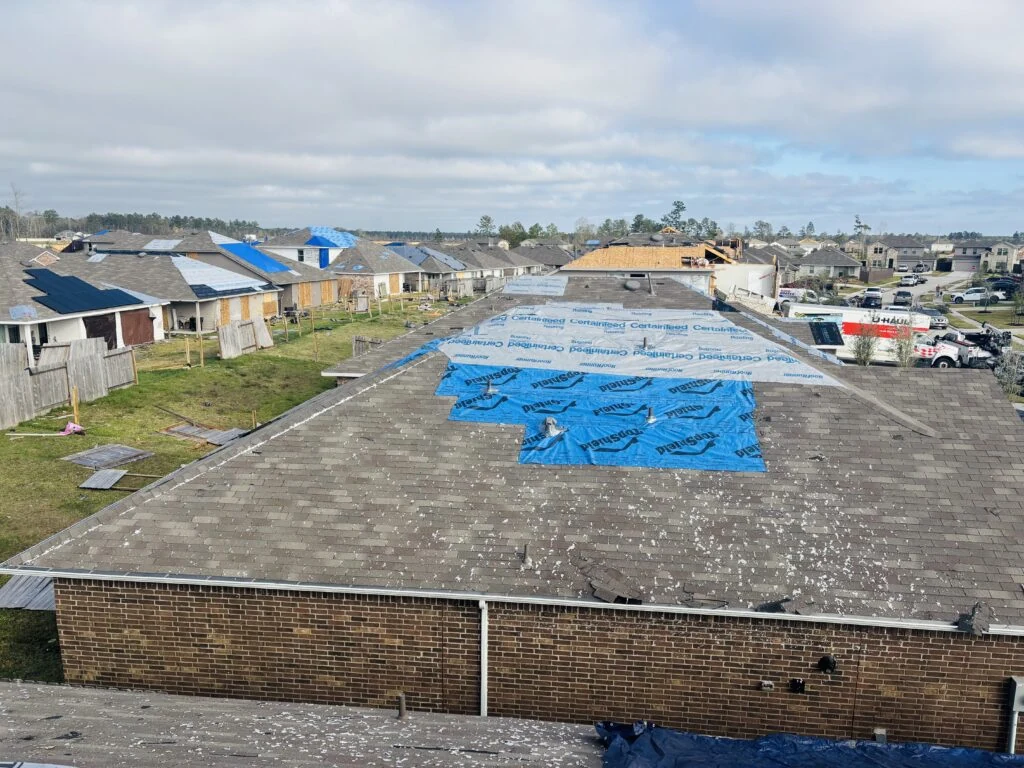
Wind pressure concentrates at roof corners and edges more than anywhere else on a flat roof, which is basic wind-uplift physics that shows up on every job we run. A membrane fastening pattern that's perfectly adequate in the field can still fail at the perimeter if the edge metal wasn't installed to the same wind-rating standard. Once edge metal lifts, wind gets underneath the membrane itself, and what started as a perimeter problem turns into a much bigger tear across the roof.
We see this pattern most often on warehouses along the outer edges of the Killam and Unitec parks, where buildings sit more exposed to open wind runs than structures packed tightly downtown. A single lifted edge-metal section on one of these long, low buildings can travel a surprising distance down a parapet run once wind gets a grip on it, which is why we check the full perimeter length rather than spot-checking a few corners and calling it done.
Coping Caps on Parapet Walls
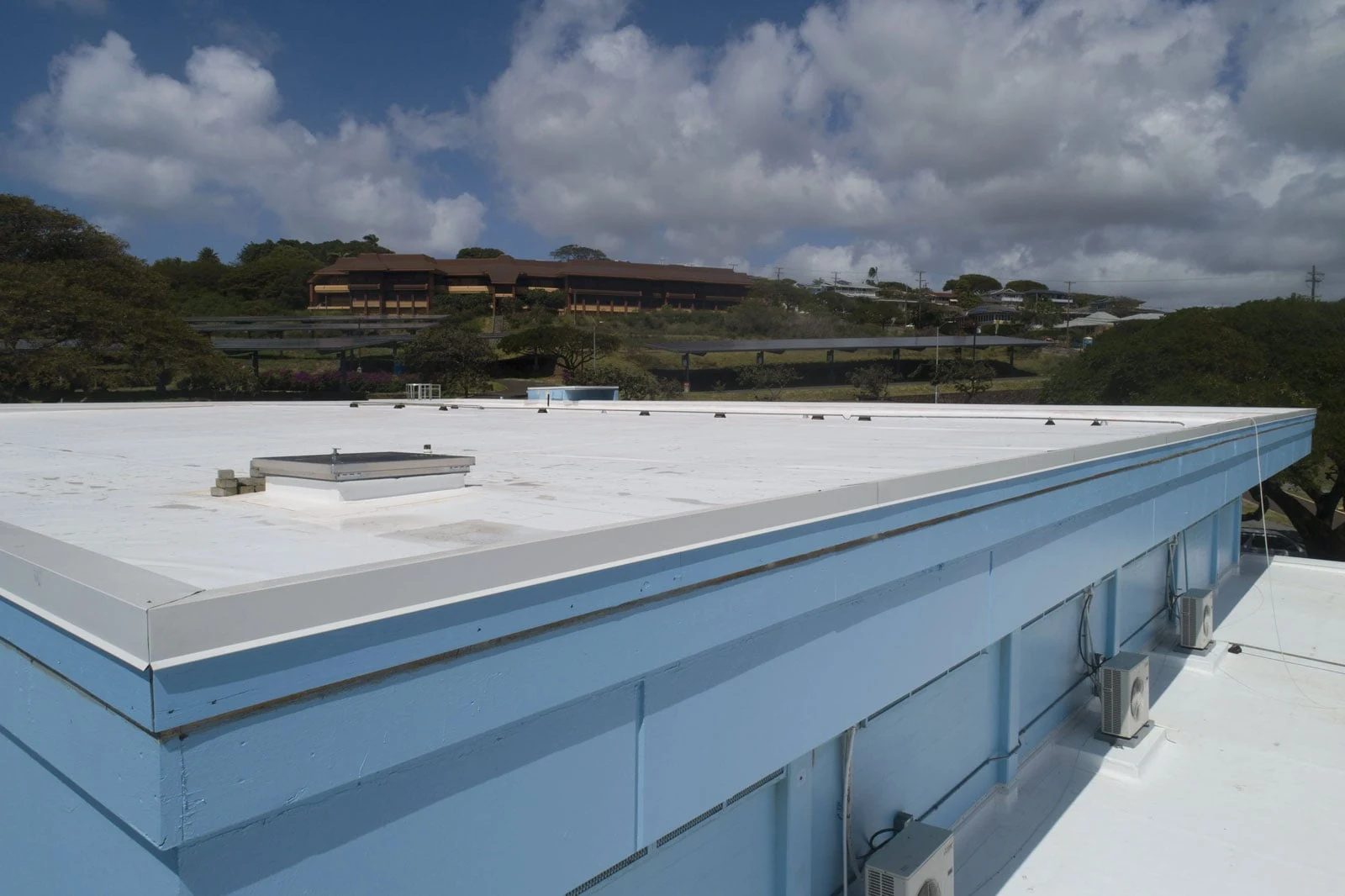
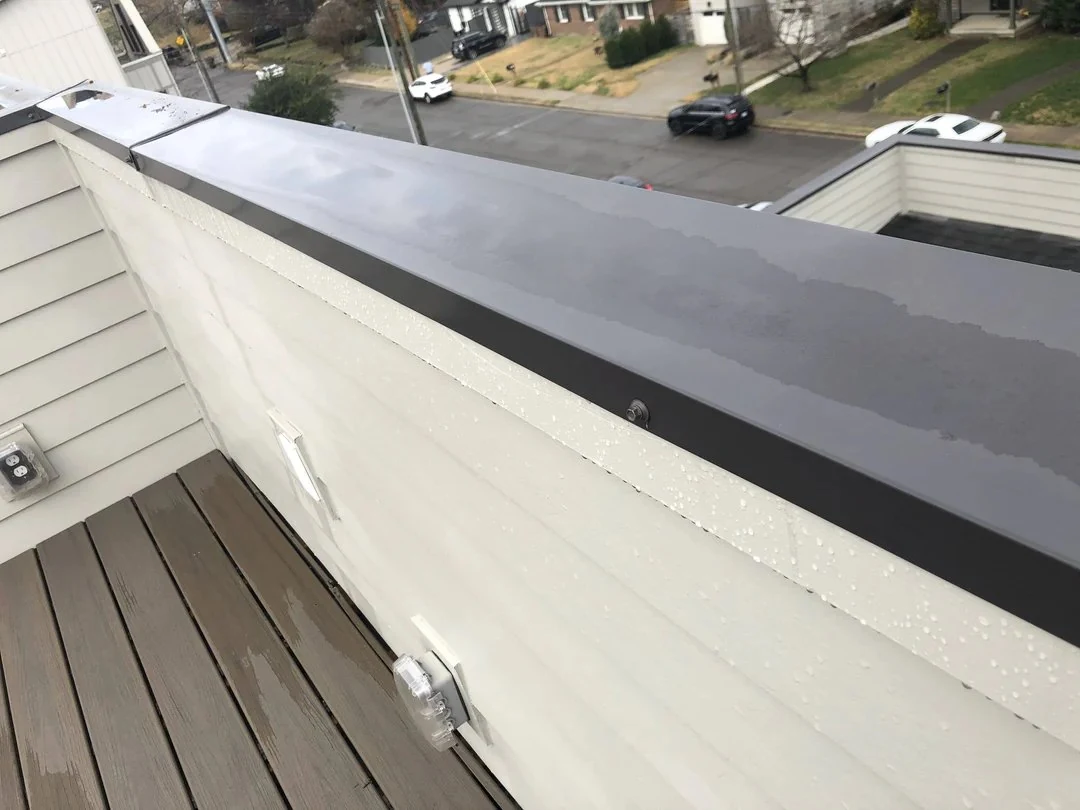
Coping sits on top of parapet walls and sheds water away from the wall assembly below it. When coping seams open or a section pulls loose, water gets behind the parapet and can travel down inside the wall long before it ever shows up as a visible roof leak. We see this most often on older buildings where coping was installed with exposed fasteners that have loosened over years of thermal movement, rather than the concealed clip systems that hold up better against repeated heat cycling.
A perimeter walk checks each of these points along every parapet run:
- Coping seam laps for separation or open joints
- Fastener condition at exposed-fastener coping systems
- Edge metal attachment and cleat engagement
- Corner miters, which take the highest wind load of any perimeter detail
- Sealant condition at all coping and edge metal joints
- Gutter and downspout attachment points
Gutters Under Short, Heavy Downpours
Storms here tend to deliver a lot of rain in a short window rather than a steady soak, which puts more stress on gutter capacity than a slower, longer rain event would. Gutters clogged with road dust from nearby truck traffic overflow fast under that kind of rainfall, and the overflow point is usually right at a building corner where it can run down a wall or pool against a foundation rather than draining where it's supposed to.
We size gutter and downspout capacity for that rainfall pattern rather than a generic regional average, since a gutter that handles a steady drizzle without trouble can still overflow within minutes once a fast-moving cell drops an inch of rain over a short stretch. On buildings with long parapet runs and limited downspout locations, that sometimes means adding overflow scuppers at the gutter line itself as a backup instead of relying on the gutter alone to keep up.
Fastening for Wind and Water Both
Edge metal and coping fastening patterns are engineered for wind uplift resistance as much as for keeping water out. A detail that looks fine and sheds water perfectly well can still be under-fastened for the wind conditions this stretch of I-35 actually sees during a fast-moving thunderstorm. We check fastening spacing against the wind-uplift rating the detail is supposed to meet rather than judging it purely by whether it looks intact from the ground.
Catching Failure Before It's a Leak
Perimeter details usually give some warning before they fail outright: a coping seam that's started to gap, a fastener that's backed out slightly, a gutter that's begun sagging away from its hangers. Catching these signs during a routine walk is a lot cheaper than the repair that follows once wind gets a real grip on a loose section during a storm.
Questions About Edge and Perimeter Details
How often should coping and edge metal get checked?
We check them during every scheduled roof inspection, since perimeter details fail differently and often earlier than the field membrane itself.
What's the difference between exposed-fastener and concealed-clip coping?
Exposed-fastener coping is held down with visible screws that can loosen over time with thermal cycling. Concealed-clip systems hide fasteners under the cap and generally hold up better over the long run against repeated expansion and contraction from daily heat cycling.
Can a gutter problem cause interior water damage?
Yes, an overflowing or clogged gutter can push water back toward the building rather than away from it, which sometimes shows up as water intrusion at a wall rather than a typical roof leak.
Do coping and edge metal repairs require touching the field membrane?
Usually not, since these are separate details from the field membrane, though the membrane termination at the edge sometimes needs attention if water has already gotten underneath it.
Is perimeter fastening rated differently than field fastening?
Yes, wind-uplift standards typically call for tighter fastening spacing at edges and corners than in the field, since that's where wind pressure concentrates hardest.