Repairing Wind and Hail Damage on Laredo's Commercial Roofs
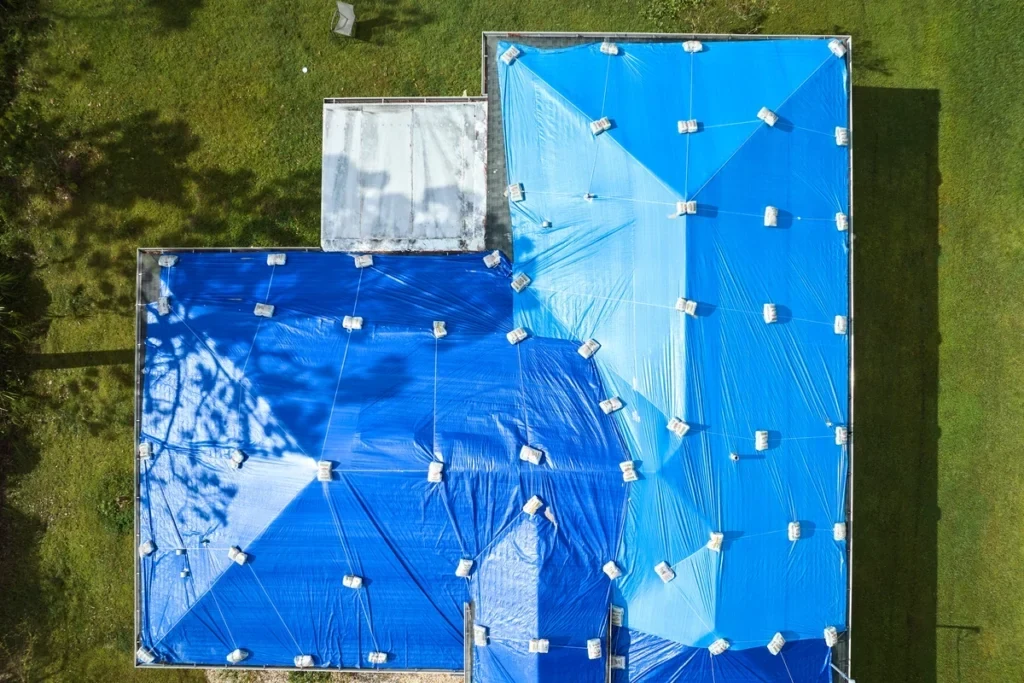
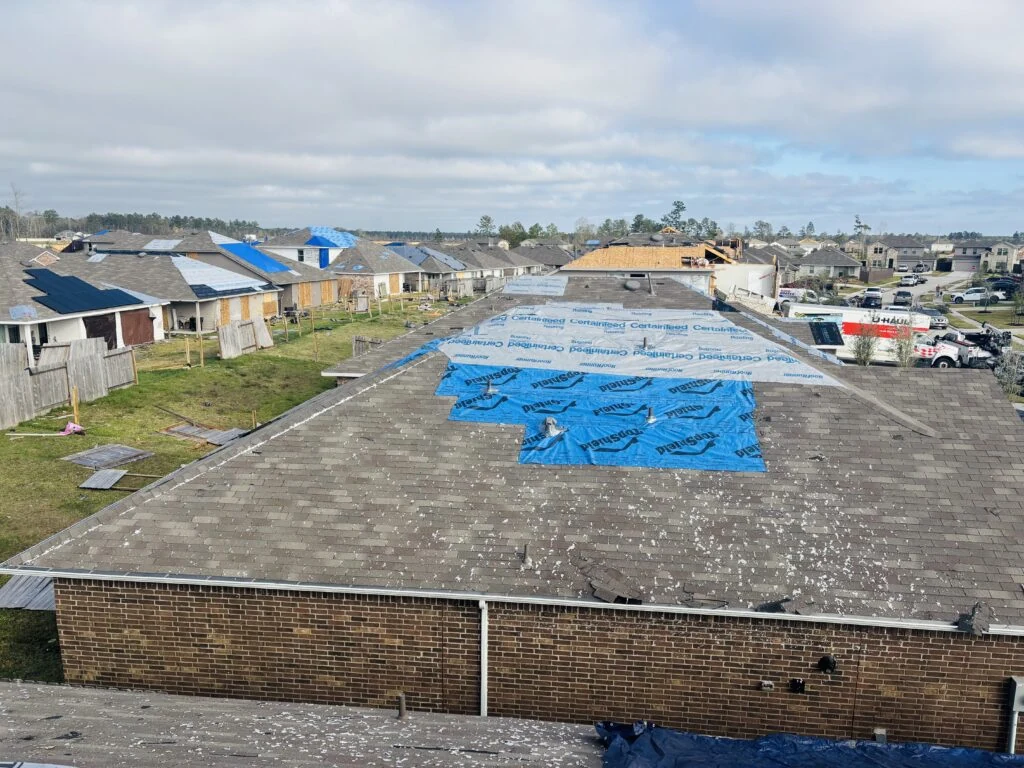
Storms here don't linger. A system rolls off the Rio Grande valley or up from the coast, drops intense wind and rain for twenty or thirty minutes, and moves on, leaving roof damage that's often more concentrated and more violent than what a longer, steadier storm would produce. We get called out after these events to assess damage and get repairs scheduled before the next system comes through.
Warehouses and distribution buildings around the Killam and Unitec parks tend to show this pattern most clearly, since their long, open rooflines and exposed edges catch wind loads that don't build the same way on smaller, more sheltered buildings closer to downtown. A single fast-moving cell can leave one side of a large roof with real damage while the opposite side shows almost nothing, which is why we walk the entire perimeter and field rather than assuming damage is spread evenly across the roof.
Short, Violent Storms Versus Long Soaking Rain
A slow-moving rain event tends to expose existing weak points gradually, drains backing up, an old seam finally giving way. A fast-moving thunderstorm with high wind gusts does something different: it can lift membrane at an edge that was otherwise holding fine, or drive hail into a surface hard enough to bruise it even where the membrane wasn't already compromised. Both types of damage need repair, but they come from different mechanisms and we assess them differently.
Wind speed at ground level also tells us less than it might in a flatter, more uniform market. A gust that reads moderate at a weather station a few miles away can accelerate significantly as it funnels between two large warehouse buildings or across an open stretch of the Killam park, so we treat every wind report as a starting point for inspection rather than a reason to skip checking a roof that reportedly saw lower wind speeds.
Separating Storm Damage From Ordinary Wear
Not every problem we find after a storm was caused by that storm. A roof that already had UV-brittle membrane or failing seams from years of heat cycling can look damaged after a wind event even if the storm itself didn't cause new failure. We document pre-existing condition against what appears to be fresh damage, since that distinction matters for whatever claims process the property owner pursues, and we're not going to tell an owner storm damage caused something that a prior inspection already flagged as wear.
Wind Uplift at Roof Edges
Edges and corners take the highest wind pressure on any flat roof, which is why membrane lifting or edge metal pulling loose almost always shows up there first after a wind event. We check perimeter fastening and edge metal attachment specifically after any high-wind report, even on roofs where the field membrane looks untouched.
Here's what we look for on a post-storm walk:
- Membrane lifted or separated at edges, corners, or parapet transitions
- Edge metal or coping caps pulled loose or missing sections
- Hail bruising or punctures on membrane, especially on older or brittle areas
- Debris impact damage from anything blown across the roof
- Rooftop equipment shifted or torn from its curb
- Drains or scuppers blocked by storm debris
Hail Bruising and Coping Damage
Hail this far south tends to run smaller than what hits the Texas Panhandle or the Metroplex, but a fast, wind-driven hail event can still bruise membrane and dent metal coping and edge details. Bruised membrane doesn't always leak right away, which is why we check for soft spots and compression marks even on a roof that isn't actively leaking after the storm.
Metal coping and edge details take hail impact differently than membrane does, showing dents and dings that are mostly cosmetic on a heavier gauge coping but can crack a thinner or already-corroded section. We note both types of damage separately in our assessment, since dented but intact coping is a lower priority repair than a cracked section that's already letting water behind the parapet.
Getting Repairs Scheduled After an Event
Once damage is documented, repair priority goes to anything actively letting water in, followed by damage that's likely to fail under the next storm even if it's holding for now. We move through that list based on risk rather than the order calls came in, and keep the property manager updated on what's fixed and what's still pending.
Storm Damage Questions We Get Most
How soon after a storm should the roof get checked?
As soon as reasonably possible, especially if more weather is in the forecast. Damage that isn't actively leaking yet can still fail under the next event if it goes unaddressed.
Can you tell the difference between storm damage and old wear?
Yes, and we document that distinction directly rather than attributing everything to the storm, since accurate documentation matters for whatever process the owner pursues afterward.
Does hail damage always cause an immediate leak?
No. Bruised membrane can hold for a while before it fails, which is why a post-storm inspection checks for compression damage even where there's no active leak yet.
What gets repaired first after a storm hits multiple areas?
Active leaks come first, followed by damage likely to fail under the next storm system, with lower-risk cosmetic damage scheduled after the urgent items are handled.
Do you provide documentation for storm damage claims?
We document all visible damage with photos and written notes at the time of assessment, which supports whatever claims process the property owner is running separately.