Modified Bitumen Roofs on Laredo's Older Commercial Buildings
Modified bitumen shows up across a lot of Laredo's older downtown and retail buildings, often layered on top of an even older built-up roof, and most of our modified bitumen work is repair, recoat, or planned replacement rather than new installation.
Where Modified Bitumen Still Sits
A significant share of downtown Laredo's older commercial stock, retail buildings, small office buildings, and some government structures near the historic district carries a modified bitumen roof installed as a retrofit over an original built-up system. These roofs were often a reasonable, durable choice at installation and can still be serviceable today if maintained.
Modified bitumen's asphalt-based composition gives it good puncture resistance and a level of self-healing at minor surface damage that single-ply membranes do not have, which is part of why it lasted as a common choice for so long on buildings with regular rooftop foot traffic.
We find a lot of it on the older office and retail buildings near San Bernardo Avenue and the downtown core, where the roofs went in during an earlier building boom and have been recovered or patched at least once since. Those buildings often have several rooftop layers stacked from prior work, which changes both the deck-load math and the tear-off disposal volume if the roof eventually needs full replacement.
Torch-Applied Installation in a Hot Climate
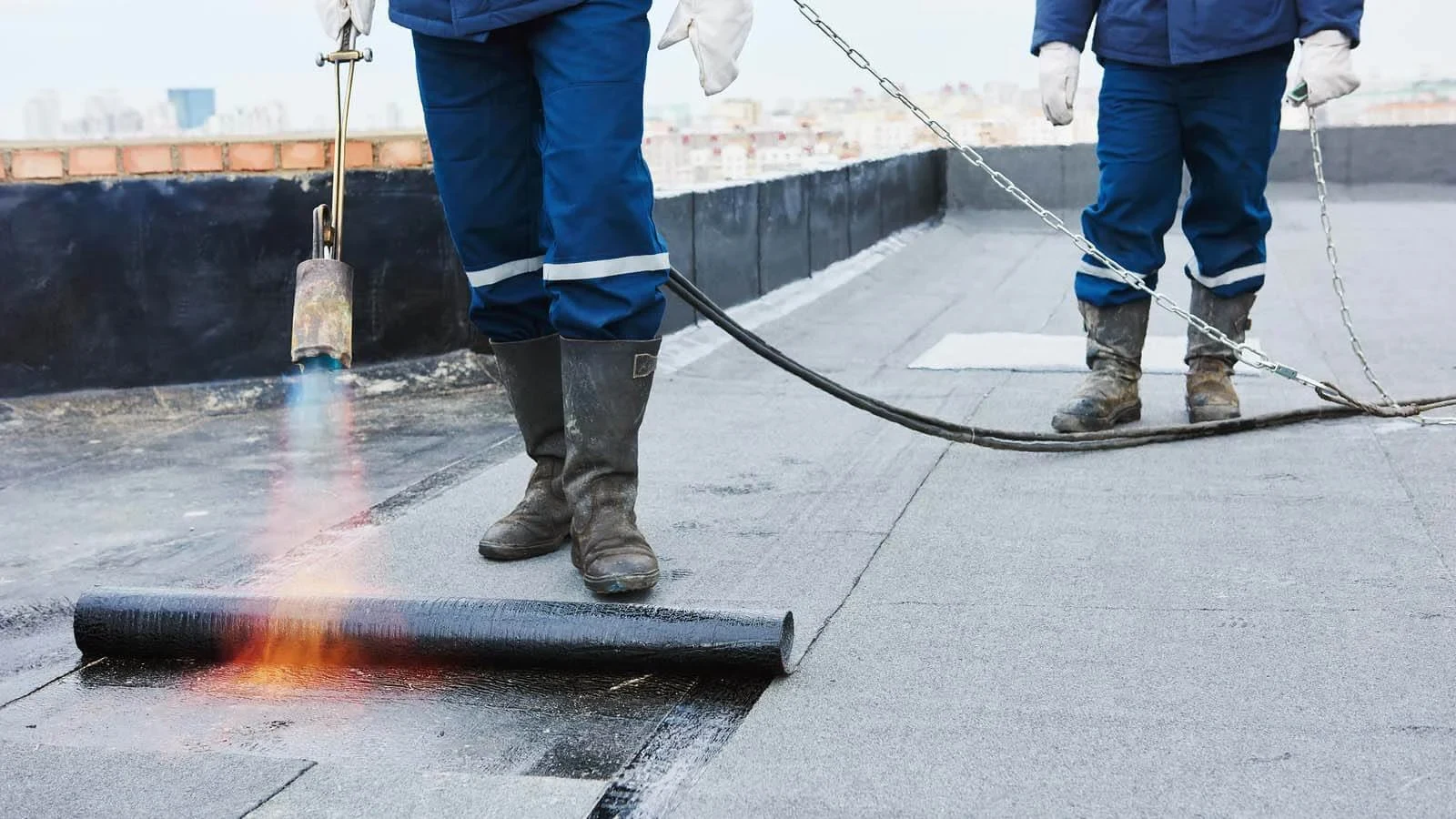
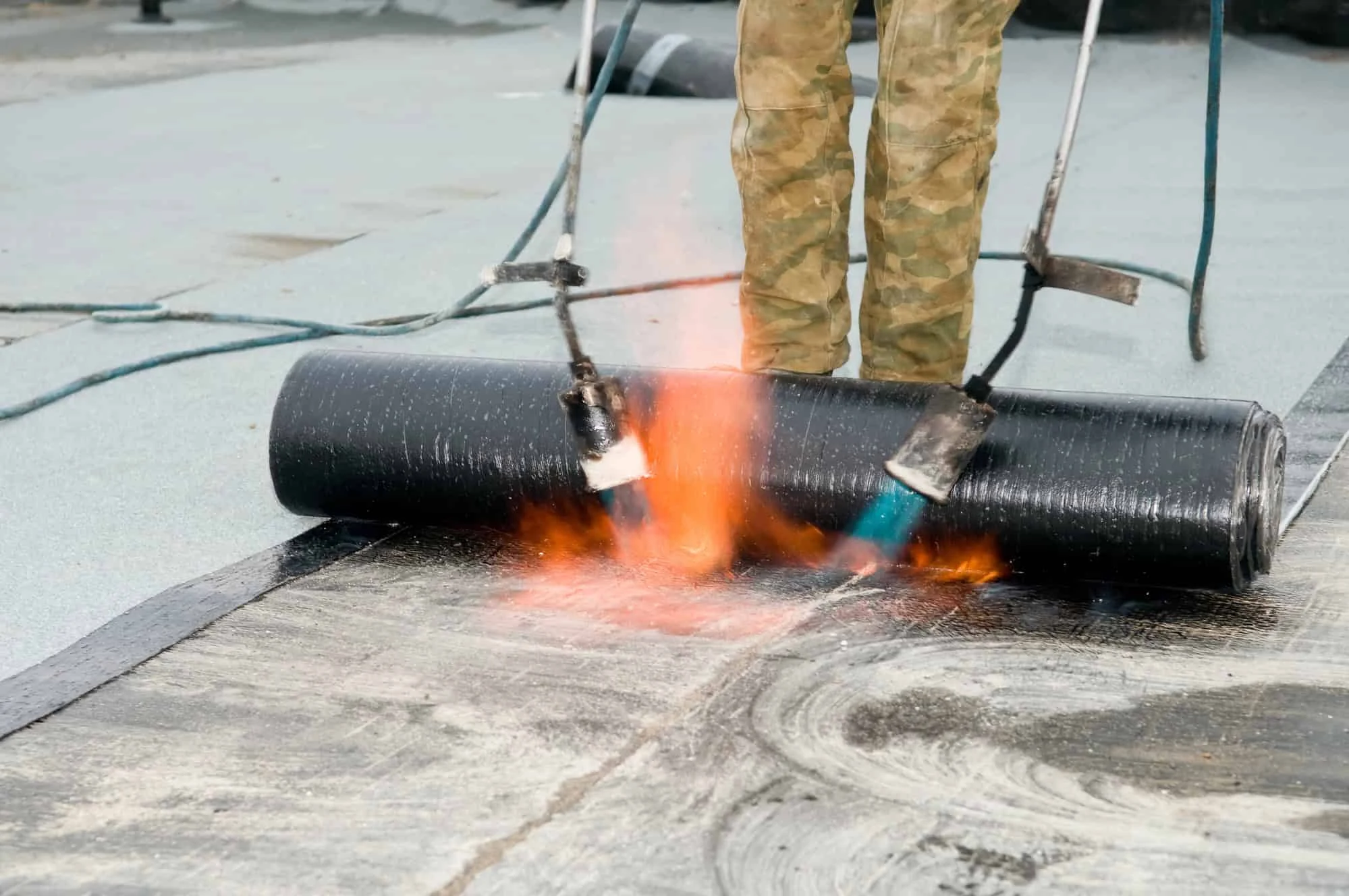
Torch-applied modified bitumen requires an open flame during installation, and doing that work safely in Laredo's summer heat takes more planning than it does in a milder climate. Crews schedule torch work for cooler parts of the day where possible, both for worker safety and because extreme ambient heat can affect how the modified bitumen bonds during application.
Cold-applied and self-adhered modified bitumen systems avoid the open-flame issue entirely and have become more common on reroofing jobs for exactly that reason, particularly on occupied buildings where fire risk during installation is a bigger concern.
What Causes Modified Bitumen to Fail
Granule loss is usually the first visible sign of an aging modified bitumen roof. The mineral granule surface protects the asphalt underneath from UV exposure, and once enough granules wear away, the exposed asphalt degrades faster under Laredo's sun, especially on south-facing slopes that take the most direct summer exposure.
Blistering and ply separation come next, usually where moisture got trapped between layers during a prior repair or where flashing was not properly integrated. We look for these specifically at parapet walls, curb flashing, and any spot where a previous patch job was done quickly rather than tied properly into the surrounding membrane.
Repair Versus Recover Versus Tear-off
A modified bitumen roof with isolated granule loss and no active leaks is usually a maintenance and monitoring situation rather than an urgent repair. Once blistering or ply separation shows up in multiple areas, patch repairs become a short-term fix rather than a real solution, and a recover or full tear-off enters the conversation.
The deciding factor is almost always what is happening below the surface: whether the insulation is dry, whether the deck has taken on damage from years of small leaks, and whether the existing plies are still bonded well enough to build a recover on top of.
- Downtown Laredo retail and small office buildings with legacy modified bitumen
- Government and municipal buildings on older retrofit roof systems
- Roofs with visible granule loss but no active leak history
- Buildings converting from torch-applied to cold-applied or self-adhered systems
- Roofs where a previous patch repair has begun separating from the field membrane
Documentation for Aging Roofs
On modified bitumen roofs approaching the end of their service life, we document condition thoroughly before recommending action: granule loss patterns, blister locations, flashing condition, and any areas of soft deck found during a walk. That record helps an owner budget for a recover or replacement on a real timeline instead of reacting to the next leak.
When storm damage hits an older modified bitumen roof, separating hail or wind damage from pre-existing wear matters for any insurance conversation. We photograph both categories of damage so the distinction is clear in the file, without promising how a claim will be decided.
That distinction is harder on modified bitumen than on a newer single-ply roof, since granule loss and blistering can look similar whether they came from a recent hailstorm or years of gradual sun exposure. We date-stamp our inspection notes and compare them against known storm activity in the area, which gives an adjuster a clearer basis for separating the two than a single post-storm photo set would.
Modified Bitumen Questions From Laredo Owners
Is my old modified bitumen roof still worth repairing?
Often yes, if the insulation below is dry and the deck is sound. Granule loss alone does not mean the roof needs replacement, though it does mean it needs closer monitoring.
Why does modified bitumen fail faster in Laredo than up north?
Extended UV and heat exposure accelerates granule loss and asphalt degradation, especially on south- and west-facing roof slopes that see the most direct summer sun.
Is torch-applied modified bitumen still used here?
Less often than before. Cold-applied and self-adhered systems have become more common, partly because they avoid open-flame installation during Laredo's hottest months.
Can a new membrane go directly over old modified bitumen?
Sometimes, if the existing plies are well bonded and the insulation is dry. We check both before recommending a recover over tear-off.
How do you know if modified bitumen damage is from a storm or just age?
We compare damage patterns against known weather events and existing wear, and document each separately with photos tied to the affected roof area.