Keeping Water Moving Off Flat Roofs Built for Big Warehouses
A flat roof doesn't shed water on its own. It depends entirely on drains, scuppers, and the slope built into the insulation to move rain off before it sits and does damage. On warehouse buildings this size, a single clogged drain or undersized scupper can leave standing water across a meaningful section of roof after even a routine rain, let alone one of the fast, heavy storms that roll through here.
Internal Drains and Scuppers Do Different Jobs
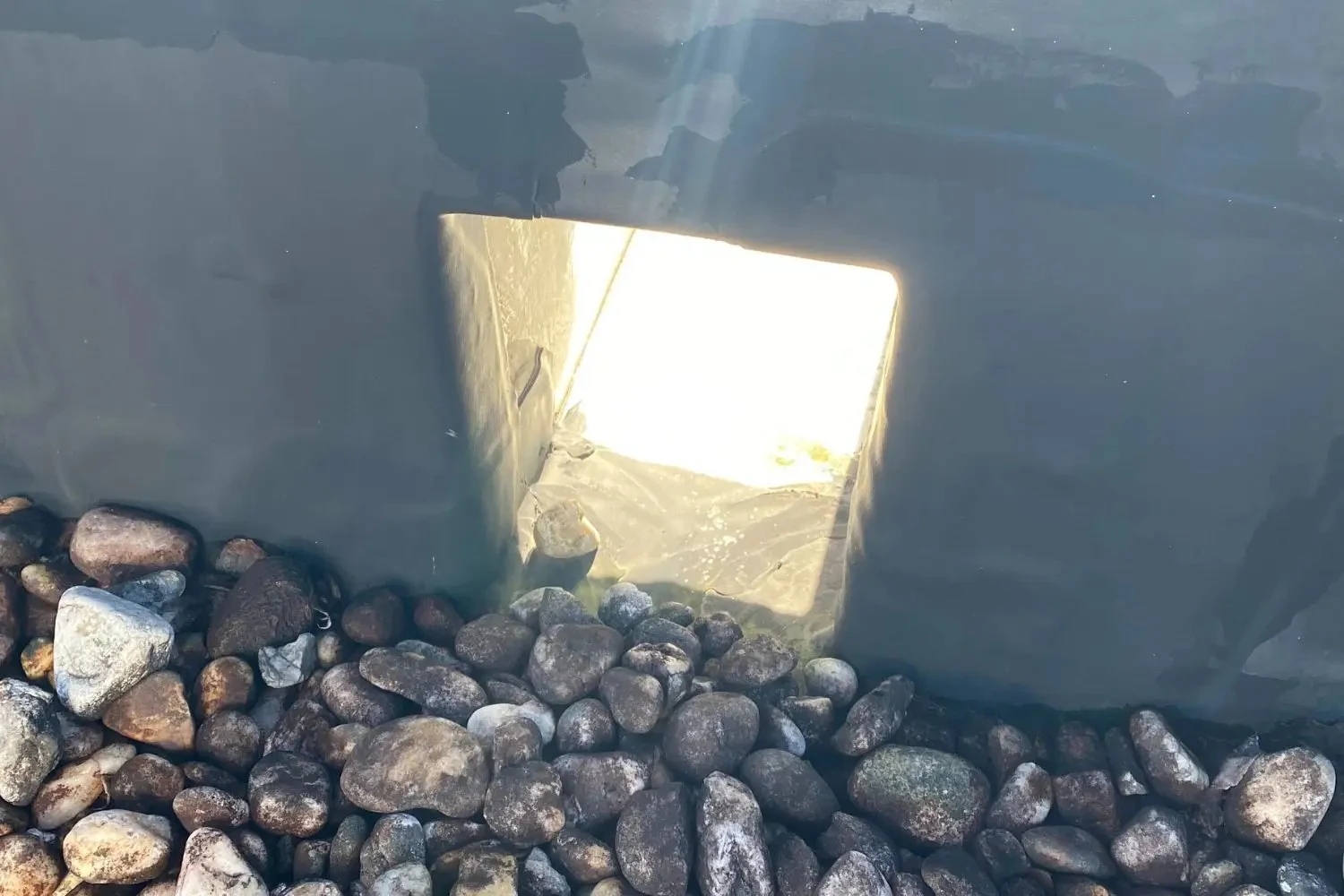
Internal drains run water down through the building's plumbing system, while scuppers are openings cut through a parapet wall that let water spill straight off the edge, usually into a gutter or downspout below. Most of the large warehouse roofs we work on use a mix of both, internal drains as the primary system and scuppers positioned higher as overflow protection if the drains can't keep up. Each has its own failure points, and each needs to be checked separately during an inspection or maintenance visit.
The number and size of drains and scuppers on a roof gets set by the design calculation for that building's roof area and the expected rainfall intensity, and it's not unusual on an older warehouse for that original design to fall short of what current storm patterns actually deliver. When we find a roof that's been undersized for drainage from the start, adding scuppers or upsizing an existing drain is often a more permanent fix than repeatedly clearing the same overwhelmed system.
Why Standing Water Matters More Than It Looks
Ponding water that clears within a day or two after rain is normal on most flat roofs and not automatically a problem. Water that's still sitting 48 hours later is a different story, since prolonged ponding adds weight, accelerates membrane aging in that specific area, and often points to a drain that isn't functioning the way it should. Left long enough, standing water can also work its way into a seam or fastener location that would otherwise have stayed dry.
Ponding also concentrates whatever debris and sediment is already on the roof into the same low spots that are struggling to drain, which compounds the problem over time. A shallow area that ponds for a day after every rain slowly becomes a shallow area that ponds for three days, then a week, as sediment settles in the same spot and the roof surface itself begins to deflect slightly under the repeated weight.
Dust and Sediment From Truck Traffic
The volume of truck traffic feeding warehouses near the World Trade Bridge kicks up a steady layer of road dust and gravel fines that eventually settles on every flat roof in the area. That sediment collects in drain bowls and scupper channels over time, narrowing the opening until a drain that handled water fine a year ago starts backing up under the same rainfall. This is one of the most common, and most preventable, drain problems we find on scheduled maintenance visits.
Signs a drain or scupper needs attention usually show up as one or more of these:
- Standing water still present more than 48 hours after rain
- Visible sediment buildup inside the drain bowl or strainer
- Rust staining or corrosion around the drain clamping ring
- A scupper opening partially blocked by debris or growth
- Water marks on the parapet below a scupper, suggesting overflow
- A drain strainer that's missing or damaged
Overflow Protection for Sudden Downpours
Fast-moving storms here can drop a significant amount of rain in a short window, which puts more demand on a drainage system in twenty minutes than a longer, steadier rain would put on it over several hours. Overflow scuppers exist specifically for that scenario, positioned slightly above the primary drain's intended water line so that if the internal drains can't keep pace, water has somewhere to go besides pooling against a parapet wall or, worse, finding its way over the edge in an uncontrolled spot.
When Repair Isn't Enough
A drain clamping ring that's corroded or a strainer that's cracked usually gets replaced on the spot during a maintenance visit. A drain body that's failed at the deck penetration is a bigger job, sometimes requiring membrane cut-back around the drain to properly reset it. We flag which category a problem falls into before starting work so there's no confusion about scope once we're up on the roof.
Drain and Scupper Questions From Property Managers
How often should drains and scuppers get cleaned?
At minimum twice a year as part of scheduled maintenance, with more frequent checks on roofs near unpaved lots or heavy truck traffic that generates extra dust and debris.
Is standing water on a flat roof always a problem?
Not automatically. Water that clears within a day or two after rain is typical. Water still standing after 48 hours usually points to a drainage issue worth investigating.
What's the purpose of a scupper if the roof already has internal drains?
Scuppers usually serve as overflow protection, positioned to handle water if the internal drain system can't keep up during a heavy, fast-moving storm.
Can a clogged drain cause damage even if the roof doesn't leak?
Yes. Prolonged ponding adds weight and accelerates membrane aging in that area even before it develops into an active leak.
Does drain repair require cutting into the membrane?
Sometimes, particularly if the drain body itself has failed at the deck penetration rather than just the strainer or clamping ring. We assess that before quoting the repair.