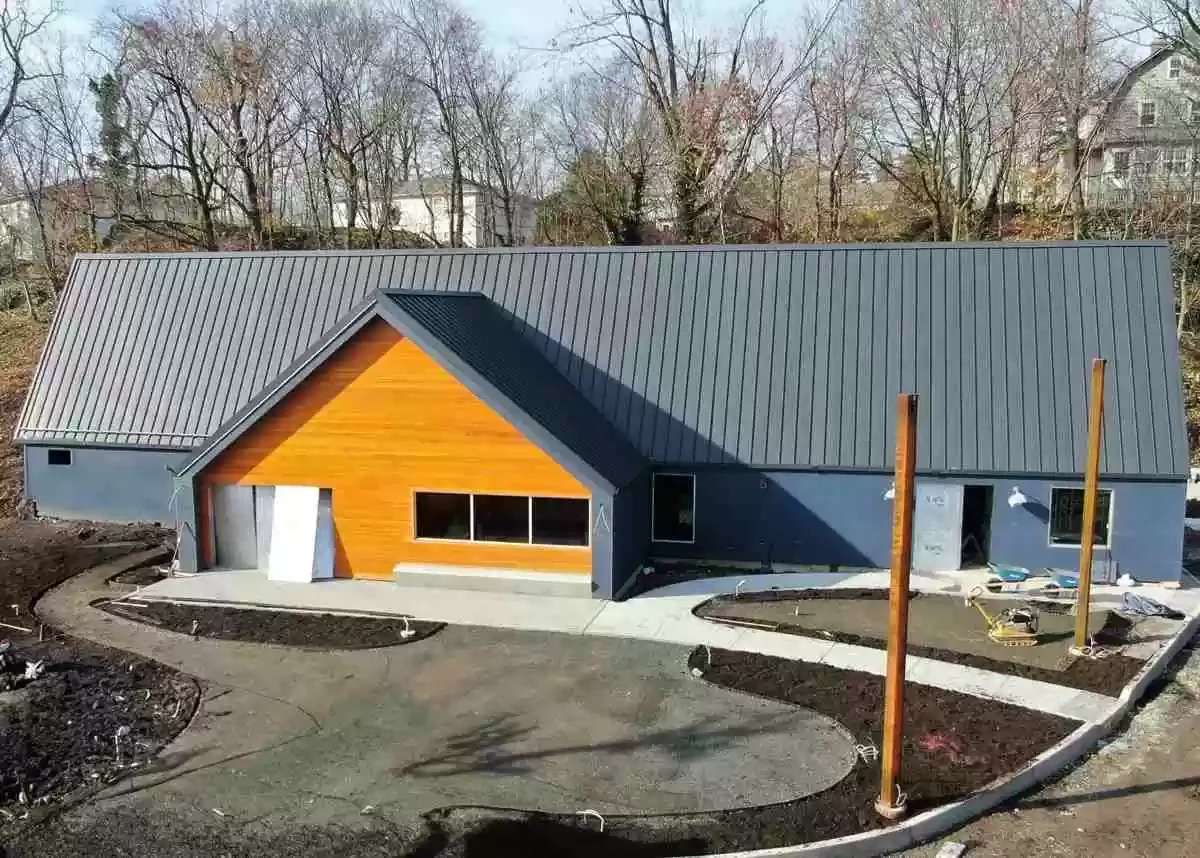
Standing Seam Metal Roofs for Laredo's Retail and Government Buildings
Standing seam metal roofing shows up on Laredo's sloped-roof retail buildings, government facilities, and hospitality properties more than on the flat warehouse stock that dominates the industrial parks, and it comes with its own set of heat and wind considerations specific to this climate.
Where Standing Seam Fits in Laredo
Sloped-roof buildings, hotel properties along the interstate corridor, some retail and restaurant buildings, and government facilities that want a durable, visually finished roof, are the typical candidates for standing seam metal. Its concealed fastener design and interlocking panel seams give it a cleaner look and generally longer service life than exposed-fastener metal systems.
It is less common on the large flat cross-dock and distribution roofs that make up most of the metro's industrial square footage, where low-slope single-ply or built-up systems are more practical for the roof geometry.
We also see standing seam specified on newer construction near the outer loop, where a developer wants the roof to read as a finished architectural feature rather than a flat field hidden behind a parapet. That visibility changes the conversation somewhat, since a dented panel or a mismatched repair section is far more noticeable on a sloped, visible roof than it would be on a warehouse roof nobody sees from the ground.
Thermal Movement and Panel Expansion
Metal panels expand and contract with temperature more than membrane roofing does, and Laredo's daily swing from cool mornings to triple-digit afternoons puts standing seam panels through more expansion-contraction cycling than a milder climate would. Panel clips are designed to allow that movement, but clips installed incorrectly or spaced too far apart can restrict it and cause panel buckling over time.
Oil-canning, the visible waviness that can appear in flat panel areas under thermal stress, is more of a cosmetic issue than a performance one, but it shows up more on buildings under sustained Laredo sun than it would farther north, and panel gauge and installation quality both affect how visible it becomes.
Wind Uplift From Summer Storms
Laredo's fast-moving summer thunderstorms can bring strong straight-line winds even without hail, and standing seam roofs need proper clip spacing and fastening to resist uplift at panel edges and ridge lines. We check clip attachment and panel seam integrity specifically after any significant wind event, since uplift damage can start at a single loose panel and progress if it is not caught.
Roof penetrations for rooftop units, vents, and antennas are the other point of vulnerability during high wind, since improperly flashed penetrations on a metal roof can work loose under repeated panel movement in ways they would not on a rigid membrane surface.
A storm that drops hail without much wind is a different inspection than one that brings both. Hail can dent panels and chip factory finish without compromising the seams, which is mostly cosmetic, while wind-driven damage tends to concentrate at ridge caps, eave trim, and panel end laps where the fastening system is doing the most work. We check for both patterns separately after any significant weather event rather than assuming one type of damage rules out the other.
Coatings and Refinishing Options
An aging standing seam roof with a faded or chalking factory finish does not necessarily need full panel replacement. A properly prepared and applied metal roof coating can restore reflectivity and extend service life on a roof that is structurally sound but cosmetically or thermally underperforming.
We check panel condition, seam integrity, and existing coating adhesion before recommending a recoat, since coating over a panel system with active leaks or failing seams just delays the underlying repair rather than solving it.
Inspection Priorities
Panel seams, clip attachment, ridge and eave flashing, and penetration details get checked first on any standing seam inspection, ahead of the flat panel field itself, since that is where failures actually start on a well-built metal roof.
We also check for granular buildup or debris in valleys and gutters, since a metal roof that is not shedding water properly because of blocked drainage paths will show problems at seams and flashing well before the panels themselves show wear.
- Hotel and hospitality properties along the interstate corridor
- Government and municipal buildings with sloped-roof designs
- Restaurant and retail buildings with visible architectural roof lines
- Roofs showing oil-canning or finish chalking from sustained UV exposure
- Buildings recovering from wind-related panel or flashing damage
Standing Seam Metal Roofing Questions
Does Laredo's heat cause problems specific to metal roofs?
Daily temperature swings drive more panel expansion and contraction here than in a milder climate, which makes correct clip spacing and installation quality more important for long-term performance.
What is oil-canning and is it a real problem?
It is the visible waviness that can appear in flat panel sections under thermal stress. It is mostly cosmetic, but panel gauge and installation affect how noticeable it becomes over time.
Can a metal roof be coated instead of replaced?
Yes, if the panels and seams are structurally sound. A coating restores reflectivity and extends service life without full panel replacement.
How does wind affect a standing seam roof differently than a flat roof?
Wind can create uplift at panel edges and seams, and we check clip attachment and seam integrity after significant storms specifically for that reason.
Is standing seam a good fit for a warehouse roof?
Less often than for sloped retail or hospitality buildings. Most of Laredo's flat warehouse stock is better suited to low-slope membrane systems.